It's been quite some time since I have felt able to write anything at all.
It isn't that I've lacked ideas. They've been elusive phantoms, arriving and then disappearing without taking form. They've visited me while I drive, or take walks, but then when I sit down with a pen or at the keyboard, they're gone. It's been odd.
I grew up writing. So much of me is based in my intimate relationship to words.
I believe part of this long break was due to compound trauma. Five years ago I joined a writing group with disastrous results, around the same time that my father's family disinherited me. In the writing group I chose to revisit parts of my failed reunion. When I put what I had on the table, my readers reacted violently, intensely, and negatively. People didn't want to read what I had written so much as project their feelings about it with a fury. They had a need to contain me, and to tell me what they felt adoptees should think and say. They asked me inappropriate questions that left me speechless, such as "Did your parents force you to live under the stairs like Harry Potter?" and "I want to write what your birth mother's experience is." I didn't write a single word about being abused by my adoptive parents. I wasn't writing about my childhood, nor is it my job to write about my birth mother's experience, except tangentially. More than one respondent asked, "Why do you feel the need to hunt her down?" I wasn't "hunting" anyone down. I wasn't a predator. I was a human being, but I wasn't seen or treated as such. Even worse, the moderator of the group--I believe because she was conflict averse--didn't step in to moderate. She even suggested that my story needed a content warning. Why? To create an atmosphere of expectation that my life is horrific? There was nothing in my story that required a content warning. As I said to all of them, "People cannot handle anything that questions the Cult of Mother Love." I had no stomach to continue sharing.
As far as reunion with my father's family went, up to that moment, things had been fairly pleasant. Some people were more open to me than others, and I accepted that. Then my grandmother died. I was heartbroken but happily surprised to be included in the obituaries. A month later, I received a phone call asking me to sign away my claim to my father's part of the inheritance; I agreed readily. I had never wanted anything financial fro reunion, and when I had met them I said as much. Then I received an e-mail from my aunts, which was cold and full of excuses as to why I didn't deserve my father's share. I wish they had left things with our phone call, but my sense is that one aunt, one in particular who had never wanted me around, needed to make it patently clear how much she didn't want me to have anything. The e-mail said that I didn't deserve the money because I wasn't around for my grandmother's life. Consider for a moment the emotional knife that was. Did I choose not to be around for my grandmother? How was that in my control, as a baby given away? My aunt insinuated that I had abandoned my grandmother. The e-mail also insinuated that I had found a way to worm my way into my grandmother's life and change the will before I had even met her. How was that possible? How horrid and rude could my aunt be? I had gladly agreed to sign away my part. Telling me that I didn't deserve it because I am not family; why? Why say it? Why say that I was a petty thief? I immediately called one of my other aunts, in tears, telling her how much the message in the e-mail hurt me. She pulled me up short, saying that I was ungrateful. WHAT? Ungrateful for signing away my inheritance? Excuse me? She said I was ungrateful because they had given me so many things already. Ok. Photographs. A mug. Two pieces of jewelry that clearly they didn't want. What part of this was a hardship for them? What part of this was a sacrifice? None of it. All the sacrifice clearly had to be mine. The line was drawn. It was clear. From that moment on, a door closed in my heart. It was too late.
I refused to be grateful for being alive, what happened to me that was beyond my control, or for scraps.
Then I was on holiday with my husband and children. My aunts were clamoring for me to sign the papers. I was out of the country, but clearly only they were allowed to travel and enjoy life. When I returned, I found out that the court date to disinherit me was MY BIRTHDAY. I cried again.
I decided to sit on the papers until after my birthday; it was too much to be disinherited on that particular day. I signed the papers April 28th, sent them off, and then I cut ties with people who clearly didn't care for me at all. It was emotionally liberating.
Do I wish these events had better outcomes? Do I think things might have been different if my father were living? Yes, of course. I am left to live with ghosts. That's my curse. I refuse, however, to allow others demand that I conform to their idea of how a "good" adoptee behaves.
I have spent the past five years thinking about how and why people demand particular things of adoptees; why some adoptees feel that they must conform or get stuck in a loop of needing constant affirmation from inaccessible resources; and how society is structured to maintain a painful, layered hegemony that people don't even recognize is present. I have also seen a strange phenomenon of people who claim the mantle/identity of "adoptee" without substantiating it. Being an adoptee is rather like inhabiting a role outside the human world. We aren't treated as human beings. People fetishize adoptees as well as abuse us. Adoptee status is a way of being an outsider whose membership is loose, and questions about it can be conveniently explained or batted away. It's confounding that people would want to claim to be adoptees, but people do many otherwise inexplicable things. Performing allegiance with people who struggle is an alluring prospect for some.
It leads me back again to fairy tales. In many ways, I believe adoption represents a ghostly, ghoulish outgrowth of some of society's worst fears, like those recorded by the Brothers Grimm and others. That might also explain part of people's attraction and desire to play roles in what they see as drama, rather than lived reality. This is a complex set of thoughts I need to assemble in a more sophisticated manner, but I am excited about where it will go. I have more ghosts to meet.
Sunday, April 12, 2020


Wednesday, May 22, 2019
Foxes and Melencolia
A few weeks ago, I read a review of Mary Norris's new book, Greek to Me: Adventures of the Comma Queen, in the New York Times. It struck me on two counts. First, of course, because anyone enamored with ancient Greece has to be sufficiently nerdy, and because she is an editor. Second, the review made reference to the old chestnut of the hedgehog and the fox, attributing it to Sir Isaiah Berlin. With all respect to Berlin, I knew he hadn't coined this metaphor but used it to describe different Russian writers; I also remembered I had a book on my shelf (Stephen Jay Gould's 2003 tome, The Hedghog, The Fox, and the Magister's Pox: Mending the Gap Between the Sciences and the Humanities) considering the same tale to describe the nature of the humanities and the sciences.
According to Gould, the source of this tale is shadowy. I sense that it owes something to Aesop and in turn, the jataka tales of the previous lives of the Buddha, but the first Western ancient reference we have is from Archilochus, a Greek poet of the 7th century BCE. Erasmus took this up and wrote in Latin, Multa novit vulpes, verum echines unum magnum. My Latin is rusty, but the gist is that the fox creates many [solutions], but the hedgehog creates one large [solution]. Thus the fox is an agile thinker while the hedgehog does one thing extremely well with great skill.
While in some ways I wish I were a hedgehog, I am a fox. I disparage myself for being so because I don't stay in one place very long, although I return to things I love.
How does this apply? I have been thinking about where I have been, who I was, and what I have learned.
My life at this point comprises many chapters. The one in St. Louis, where I absolutely didn't fit in except perhaps at the tail end of high school. My work then was to engineer a way out, which I did. I have several memories that stand out, one of which is of my 7th grade English teacher, who introduced me to Shirley Jackson and Ray Bradbury. Mr. Sinclair's encouragement meant the world to me. He used to call me the Professor in an affectionate way, and I thought I would walk that path.
There was my life in England, spread over many years, in which I was an outsider, but being different, happily, never mattered. From primary school to Cambridge to the Paul Mellon Centre and beyond, I could be my eccentric self without remark; as one of my best friends told my husband and children, "She was always very focused." When I was in London recently, I walked through its streets and crossed paths with my ghost selves, not needing a map. I learned that London feels the most like home to me.
There was my life at Bryn Mawr, which was rocky at the time, but which I now recall fondly. I tried on many hats and many languages (over the years, perhaps seven). I self-flagellate for not becoming fluent in any, although I can muddle through in most of them. It brings me pleasure to be able to read things in the original, even if at times it is a hard slog. I adored my courses in architecture and archaeology, even the 8 AM Greek sculpture lectures with Mrs. Ridgway, who would shake her worry beads in your face if you dared doze off. I wrote an undergraduate thesis on the Assyrians and representations of architecture in palace sculpture; my committee said belatedly they wished they had asked me to stay for my master's. Tant pis. I learned that my heart is anchored in antiquity.
There was my year on the Watson Fellowship, writing poetry in the Hebrides and in Ireland, engaging with writing and history and identity. I loved the immense freedom: exploring sites, reading, meeting people. It was idyllic but of course transitory. I learned that poetry is how I feel most comfortable expressing what is hardest for me to say.
There was the long, painful time in graduate school at Berkeley, slipping about in a murderous chess game between powerful people while trying to find my footing. I entered as a medievalist and left as a scholar of the long 19th century, speaking of moving on to different fields. Oh, and my master's thesis was on an ancient topic, to add to my foxy nature. I learned that no one was going to stop me, despite the landmines and Molotov cocktails chucked my way.
Then academia and being torpedoed. Deciding to apply either to medical school or nursing school, and choosing the latter so as not to abandon my children for seven years. Nursing it was and is; I have been in maternal child nursing for 10+ years at this point. I learned humbly that bedside nursing feels right to me.
Then of course there was technical editing at Oracle during the tech bubble around 2000 and now freelance academic editing. Occasionally I write for myself, but not enough, and I still don't feel I know what I am meant to write. I know it's poetry, but I wait.
I am a restless thinker. My mind moves about at immense speed. I read voluminously: newspapers, reviews, journals, magazines, books. I also unabashedly adore popular culture and see as many films of all types as I am able to squeeze into my schedule. I make connections and love relationships between texts and in art. I think constantly about the hows and whys things are/work as they do.
It pleases me that the article I published on 19th-century design and nationalism in Britain has proved useful to people. Sometimes I think I might like to publish another academic article, but other times it seems like a frivolous conversation, given what I see at work every day: people fighting to survive, especially women and infants of color. I am stubborn and committed to finding more ways to improve outcomes for them.
All of this is me, but it is impossible to plumb the depths of it. Perhaps two, maybe three people have access to these accordion folds and my feelings about them; although I share willingly, they can't see the entirety.
Certainly at its heart, forging identity is a lifelong process (as it is for anyone else), but there is always that ghost person--the buried identity, who I might have been--who I am always chasing. Why am I this way, and how might I have been different? These are unanswerable questions with an incessant siren call. Finding my family has helped me put a few things into context. My great-great-grandmother and another great-grandmother being English may have drawn me there, despite my adoptive father's job. I don't know. Then the languages: I have always been good at learning them, but knowing about my family's history in diplomacy and being multilingual might be at the heart of my desire to speak French and German ever since I was tiny. In my bones I am the sum of those who came before me, and they speak to me, whether or not I recognize their voices and messages.
What am I doing in this life, what I am leaving that is of value? I ask myself this daily, hourly sometimes. My work in the hospital leaves me feeling that I do something worthwhile--I stand by, guard, and act as witness for women and their families in intimate moments. That said, I can't help peeling back the layers. How does all of this make me who I am? What is identity in the world of an adoptee? How can we make sure that adoptees are the ones who control this narrative about ourselves?
And while I do that, there will always be more. More questions, more seeking, more pushing myself to figure this out, running about like a fox, finding joy and inspiration in poetry, film, novels, plays, and marvelous actors like Mr. H, who touch my heart. I may sometimes be like Duerer's gloomy seraph, but I wouldn't trade my melancholy for the life of a lotus eater. Not at all.

According to Gould, the source of this tale is shadowy. I sense that it owes something to Aesop and in turn, the jataka tales of the previous lives of the Buddha, but the first Western ancient reference we have is from Archilochus, a Greek poet of the 7th century BCE. Erasmus took this up and wrote in Latin, Multa novit vulpes, verum echines unum magnum. My Latin is rusty, but the gist is that the fox creates many [solutions], but the hedgehog creates one large [solution]. Thus the fox is an agile thinker while the hedgehog does one thing extremely well with great skill.
While in some ways I wish I were a hedgehog, I am a fox. I disparage myself for being so because I don't stay in one place very long, although I return to things I love.
How does this apply? I have been thinking about where I have been, who I was, and what I have learned.
My life at this point comprises many chapters. The one in St. Louis, where I absolutely didn't fit in except perhaps at the tail end of high school. My work then was to engineer a way out, which I did. I have several memories that stand out, one of which is of my 7th grade English teacher, who introduced me to Shirley Jackson and Ray Bradbury. Mr. Sinclair's encouragement meant the world to me. He used to call me the Professor in an affectionate way, and I thought I would walk that path.
There was my life in England, spread over many years, in which I was an outsider, but being different, happily, never mattered. From primary school to Cambridge to the Paul Mellon Centre and beyond, I could be my eccentric self without remark; as one of my best friends told my husband and children, "She was always very focused." When I was in London recently, I walked through its streets and crossed paths with my ghost selves, not needing a map. I learned that London feels the most like home to me.
There was my life at Bryn Mawr, which was rocky at the time, but which I now recall fondly. I tried on many hats and many languages (over the years, perhaps seven). I self-flagellate for not becoming fluent in any, although I can muddle through in most of them. It brings me pleasure to be able to read things in the original, even if at times it is a hard slog. I adored my courses in architecture and archaeology, even the 8 AM Greek sculpture lectures with Mrs. Ridgway, who would shake her worry beads in your face if you dared doze off. I wrote an undergraduate thesis on the Assyrians and representations of architecture in palace sculpture; my committee said belatedly they wished they had asked me to stay for my master's. Tant pis. I learned that my heart is anchored in antiquity.
There was my year on the Watson Fellowship, writing poetry in the Hebrides and in Ireland, engaging with writing and history and identity. I loved the immense freedom: exploring sites, reading, meeting people. It was idyllic but of course transitory. I learned that poetry is how I feel most comfortable expressing what is hardest for me to say.
There was the long, painful time in graduate school at Berkeley, slipping about in a murderous chess game between powerful people while trying to find my footing. I entered as a medievalist and left as a scholar of the long 19th century, speaking of moving on to different fields. Oh, and my master's thesis was on an ancient topic, to add to my foxy nature. I learned that no one was going to stop me, despite the landmines and Molotov cocktails chucked my way.
Then academia and being torpedoed. Deciding to apply either to medical school or nursing school, and choosing the latter so as not to abandon my children for seven years. Nursing it was and is; I have been in maternal child nursing for 10+ years at this point. I learned humbly that bedside nursing feels right to me.
Then of course there was technical editing at Oracle during the tech bubble around 2000 and now freelance academic editing. Occasionally I write for myself, but not enough, and I still don't feel I know what I am meant to write. I know it's poetry, but I wait.
I am a restless thinker. My mind moves about at immense speed. I read voluminously: newspapers, reviews, journals, magazines, books. I also unabashedly adore popular culture and see as many films of all types as I am able to squeeze into my schedule. I make connections and love relationships between texts and in art. I think constantly about the hows and whys things are/work as they do.
It pleases me that the article I published on 19th-century design and nationalism in Britain has proved useful to people. Sometimes I think I might like to publish another academic article, but other times it seems like a frivolous conversation, given what I see at work every day: people fighting to survive, especially women and infants of color. I am stubborn and committed to finding more ways to improve outcomes for them.
All of this is me, but it is impossible to plumb the depths of it. Perhaps two, maybe three people have access to these accordion folds and my feelings about them; although I share willingly, they can't see the entirety.
Certainly at its heart, forging identity is a lifelong process (as it is for anyone else), but there is always that ghost person--the buried identity, who I might have been--who I am always chasing. Why am I this way, and how might I have been different? These are unanswerable questions with an incessant siren call. Finding my family has helped me put a few things into context. My great-great-grandmother and another great-grandmother being English may have drawn me there, despite my adoptive father's job. I don't know. Then the languages: I have always been good at learning them, but knowing about my family's history in diplomacy and being multilingual might be at the heart of my desire to speak French and German ever since I was tiny. In my bones I am the sum of those who came before me, and they speak to me, whether or not I recognize their voices and messages.
What am I doing in this life, what I am leaving that is of value? I ask myself this daily, hourly sometimes. My work in the hospital leaves me feeling that I do something worthwhile--I stand by, guard, and act as witness for women and their families in intimate moments. That said, I can't help peeling back the layers. How does all of this make me who I am? What is identity in the world of an adoptee? How can we make sure that adoptees are the ones who control this narrative about ourselves?
And while I do that, there will always be more. More questions, more seeking, more pushing myself to figure this out, running about like a fox, finding joy and inspiration in poetry, film, novels, plays, and marvelous actors like Mr. H, who touch my heart. I may sometimes be like Duerer's gloomy seraph, but I wouldn't trade my melancholy for the life of a lotus eater. Not at all.

Sunday, December 02, 2018
The Long Haul
I was raised an only child in my adoptive family. I always knew I probably had siblings out there, but I didn't know how many or who they were.
Nine and a half years ago, I finally found out who my mother was, and in discovering that, I found that she had a son who she had kept and raised. He is almost exactly five years younger than I am. I was thrilled for a number of reasons, mostly because he seemed to be so much like me.
He has two doctorates. He is incredibly intelligent and driven. At first I was very nervous, thinking I couldn't live up to what he had accomplished, but I realized that what I do is different. My doctorate is something else, in a different field, but we match each other in many ways.
As we got to know each other--and it was difficult, given the crossfire and doubt of a mother who didn't want us to have a relationship at all--it became clear that not only were we similar intellectually, we have the same emotional structure. We are people pleasers. We doubt ourselves. We bend over backwards to make everyone else happy at our own expense: all this, and we weren't raised in the same family. We are anxious and nervous. We are perfectionists. We are harsh on ourselves. We love reading. He lives to research and publish. I--well--I have published, although I give up on myself more easily. I would say that we are both passionate about our fields.
From the start, he was committed to knowing me, and I felt welcomed and loved. But even given his commitment, it wasn't easy.
Then came the fall; it was hard and precipitous. It came because our mother demanded it, and he was raised to please her. For anyone who knows adoption, it was the same old story, the same puppeteer pulling the strings.
I don't excuse the way my brother treated me. It was terrible. Awful. I don't want to catalogue the ways in which I felt abandoned; it happened more than once over a number of years. Friends of mine saw me plummet to the bottom of a dark abyss, almost to extinguish myself. They asked me again and again, "Why do you love him? Why do you keep trying?"
I really didn't have a good answer. At one point, I had to shut the door on any relationship. I chose myself because I was worth more than I was receiving. I refused to speak to my brother for almost three years because I didn't want to be an afterthought. I wanted to be his sister.
I probably wouldn't have opened the door to my brother again if I hadn't been contacted by a surprise sister. Yes, our mother had another baby that neither my brother nor I knew about because...why would our mother tell the truth about anything?
When our sister contacted me, I was shocked and had the breath knocked out of me. What? How could it be that our mother lied about having another secret child? Oh, wait: it's our mother. It seemed unfathomable that she could have gone through two hidden pregnancies in college and done this twice, but, yeah.
I contacted my brother after these three years of silence and told him about our sister. He said immediately, "I don't even care right now that we have another sister. I am so happy that we are speaking again. Also, now you know how it feels." It's crazy to be blindsided by someone else's secrets and lies. It really is.
After this explosive event, my brother and I have worked to reconnect. Over the years, I was explicit about what I wanted and needed, and he has taken it to heart. He responds to me in real time. He is available to me. He listens. He opens up. He wants to be present, and he is. For all my saying people don't change, it's not true. It's that people don't change unless they commit to changing. They have to want to meet you halfway.
I know people who have siblings (like my husband) who aren't close to them at all. I understand that blood doesn't mean people are similar or share interests. My brother and I aren't alike in what we do or care about, although we both work in the medical arena, but we listen to each other and understand being sensitive and have a good sense of humor about what we both lack.
From the first time I met him, nearly nine years ago in December of 2009, I knew that we were on the same page. I knew that building a lasting relationship would be difficult. I trusted him, and he let me down. More than once. Now, though, I think we are in it for the long haul. I am at least willing to try.
Nine and a half years ago, I finally found out who my mother was, and in discovering that, I found that she had a son who she had kept and raised. He is almost exactly five years younger than I am. I was thrilled for a number of reasons, mostly because he seemed to be so much like me.
He has two doctorates. He is incredibly intelligent and driven. At first I was very nervous, thinking I couldn't live up to what he had accomplished, but I realized that what I do is different. My doctorate is something else, in a different field, but we match each other in many ways.
As we got to know each other--and it was difficult, given the crossfire and doubt of a mother who didn't want us to have a relationship at all--it became clear that not only were we similar intellectually, we have the same emotional structure. We are people pleasers. We doubt ourselves. We bend over backwards to make everyone else happy at our own expense: all this, and we weren't raised in the same family. We are anxious and nervous. We are perfectionists. We are harsh on ourselves. We love reading. He lives to research and publish. I--well--I have published, although I give up on myself more easily. I would say that we are both passionate about our fields.
From the start, he was committed to knowing me, and I felt welcomed and loved. But even given his commitment, it wasn't easy.
Then came the fall; it was hard and precipitous. It came because our mother demanded it, and he was raised to please her. For anyone who knows adoption, it was the same old story, the same puppeteer pulling the strings.
I don't excuse the way my brother treated me. It was terrible. Awful. I don't want to catalogue the ways in which I felt abandoned; it happened more than once over a number of years. Friends of mine saw me plummet to the bottom of a dark abyss, almost to extinguish myself. They asked me again and again, "Why do you love him? Why do you keep trying?"
I really didn't have a good answer. At one point, I had to shut the door on any relationship. I chose myself because I was worth more than I was receiving. I refused to speak to my brother for almost three years because I didn't want to be an afterthought. I wanted to be his sister.
I probably wouldn't have opened the door to my brother again if I hadn't been contacted by a surprise sister. Yes, our mother had another baby that neither my brother nor I knew about because...why would our mother tell the truth about anything?
When our sister contacted me, I was shocked and had the breath knocked out of me. What? How could it be that our mother lied about having another secret child? Oh, wait: it's our mother. It seemed unfathomable that she could have gone through two hidden pregnancies in college and done this twice, but, yeah.
I contacted my brother after these three years of silence and told him about our sister. He said immediately, "I don't even care right now that we have another sister. I am so happy that we are speaking again. Also, now you know how it feels." It's crazy to be blindsided by someone else's secrets and lies. It really is.
After this explosive event, my brother and I have worked to reconnect. Over the years, I was explicit about what I wanted and needed, and he has taken it to heart. He responds to me in real time. He is available to me. He listens. He opens up. He wants to be present, and he is. For all my saying people don't change, it's not true. It's that people don't change unless they commit to changing. They have to want to meet you halfway.
I know people who have siblings (like my husband) who aren't close to them at all. I understand that blood doesn't mean people are similar or share interests. My brother and I aren't alike in what we do or care about, although we both work in the medical arena, but we listen to each other and understand being sensitive and have a good sense of humor about what we both lack.
From the first time I met him, nearly nine years ago in December of 2009, I knew that we were on the same page. I knew that building a lasting relationship would be difficult. I trusted him, and he let me down. More than once. Now, though, I think we are in it for the long haul. I am at least willing to try.
Thursday, November 29, 2018
Optimism--or--What the Hell Was I Thinking?
Why do I seek out the attention of people who can never and will never be present for me?
Why is feeling unsettled both comfortable and excruciating?
Rhetorical questions: I know the answer. It's long and complicated. Yet here I am, again.
I love to be hopeful. I have been hopeful for years. I have given people I love incredible amounts of leeway. I was told by a therapist once to see these people as rubber bands; they stretch and return (maybe). I always want to see the best in people I love. I forever want to imagine my friends being their happiest selves and also sharing their joys and sadnesses with me.
Recently I have counseled friends around me, stuck in their grooves, wanting things that will never happen; they are chasing ghost relationships. I see what they are doing, and I gently remind them not to put energy into things that cannot change. At the same time, I know that I do it, too.
The terrible truth is that I see things that aren't there. I ignore the uneasiness in my gut and tell myself this time will be different. I end up in murky pools of self-loathing because I desperately want to perceive things just so. I also think I pursue people who give me crumbs, feed me half-truths, and lead me along to suit themselves because their inconstancy is weirdly seductive. What they tell me is true, but only up to a point. When I press them about what they mean, they generally evade my questions or dissemble. I know that they aren't telling me the truth, but I look past that and accept whatever partial shiny bits I like.
The most painful thing is that these situations are all very predictable. I am 49. I have been here many times. I could be a contender in the Olympics of reading narcissistic people.
I know that in all honesty, I set myself up. I blame myself harshly for this, but what I should do--and am doing--is to change my behavior. That's all I can do. The reality is that these are people who aren't meant to be in my life. I am finally accepting that. I have slowly cut them out, one by one, until there was one left, one dogged remainder. And now that is over. I am both hurt and relieved.
I remember long ago, when I first met my husband. I was heartsore and bruised. I had been with a man who didn't make me a priority. Just didn't. He loved me, but I wasn't even in the top three important things in his life, or if I was, I didn't feel it. I said so again and again. Finally we broke up, which was for the better, although I have always missed his wit and intelligence.
Anyway, not long after that I met my husband. He is steadfast, if nothing else. He always shows up. I remember maybe three weeks into dating, one long ago July, he asked me to go on a rafting trip with him that following September. I thought, "What? How can you be certain you still want to be with me seven weeks from now?" I asked my friends what to do, and if this was normal. They said it was, if we liked each other. I had no experience of this, really, because I had always been with men who were incredibly emotionally absent and selfish and barely thought past the next day.
So my now-husband called every day. He made room for me in his life. Really made room. He has issues, big ones, like being Prussian and throwing me under the bus with his mother, on top of many other things I don't wish to catalogue in public (I am not perfect, so I am not finger pointing here). But I could count on him, and 21 years later, he may drive me insane, but he still shows up. He doesn't make excuses; things will happen or they won't happen, but he is always upfront about it. Our relationship is messy on many levels, but he is reliable. That matters to me. That isn't to say there aren't huge holes in my life. There are. That said, no matter how much we fight, no matter how awful it gets, he is present--at least to talk when I am vulnerable.
All this to say that last night, I felt like Charlie Brown with Lucy, when when she pulls away the football. That's exactly it: people don't change. It's incredibly hard for me to trust people; it's hard for me to accept I am not a priority when I care about them, but c'est la vie. It's hard for me to be put away in a box, but if I am, that means it is truly time to close the door. When someone says, "Got to go, bye, see ya later!" and they don't come back, take them at their word. The first time. And don't go after them.
Part of my willingness to go after people who clearly don't make me a priority has to be related to being left at the hospital that one time. It sucks having to be the one to love myself enough to mend that, but that's the plan.
I think again to dear Charles Trenet and "Que reste-t-il de nos amours." Sometimes things should remain memories. I can't bear anymore souvenirs qui me poursuit sans cesse.
https://youtu.be/c8T0bnS5vsk
Why is feeling unsettled both comfortable and excruciating?
Rhetorical questions: I know the answer. It's long and complicated. Yet here I am, again.
I love to be hopeful. I have been hopeful for years. I have given people I love incredible amounts of leeway. I was told by a therapist once to see these people as rubber bands; they stretch and return (maybe). I always want to see the best in people I love. I forever want to imagine my friends being their happiest selves and also sharing their joys and sadnesses with me.
Recently I have counseled friends around me, stuck in their grooves, wanting things that will never happen; they are chasing ghost relationships. I see what they are doing, and I gently remind them not to put energy into things that cannot change. At the same time, I know that I do it, too.
The terrible truth is that I see things that aren't there. I ignore the uneasiness in my gut and tell myself this time will be different. I end up in murky pools of self-loathing because I desperately want to perceive things just so. I also think I pursue people who give me crumbs, feed me half-truths, and lead me along to suit themselves because their inconstancy is weirdly seductive. What they tell me is true, but only up to a point. When I press them about what they mean, they generally evade my questions or dissemble. I know that they aren't telling me the truth, but I look past that and accept whatever partial shiny bits I like.
The most painful thing is that these situations are all very predictable. I am 49. I have been here many times. I could be a contender in the Olympics of reading narcissistic people.
I know that in all honesty, I set myself up. I blame myself harshly for this, but what I should do--and am doing--is to change my behavior. That's all I can do. The reality is that these are people who aren't meant to be in my life. I am finally accepting that. I have slowly cut them out, one by one, until there was one left, one dogged remainder. And now that is over. I am both hurt and relieved.
I remember long ago, when I first met my husband. I was heartsore and bruised. I had been with a man who didn't make me a priority. Just didn't. He loved me, but I wasn't even in the top three important things in his life, or if I was, I didn't feel it. I said so again and again. Finally we broke up, which was for the better, although I have always missed his wit and intelligence.
Anyway, not long after that I met my husband. He is steadfast, if nothing else. He always shows up. I remember maybe three weeks into dating, one long ago July, he asked me to go on a rafting trip with him that following September. I thought, "What? How can you be certain you still want to be with me seven weeks from now?" I asked my friends what to do, and if this was normal. They said it was, if we liked each other. I had no experience of this, really, because I had always been with men who were incredibly emotionally absent and selfish and barely thought past the next day.
So my now-husband called every day. He made room for me in his life. Really made room. He has issues, big ones, like being Prussian and throwing me under the bus with his mother, on top of many other things I don't wish to catalogue in public (I am not perfect, so I am not finger pointing here). But I could count on him, and 21 years later, he may drive me insane, but he still shows up. He doesn't make excuses; things will happen or they won't happen, but he is always upfront about it. Our relationship is messy on many levels, but he is reliable. That matters to me. That isn't to say there aren't huge holes in my life. There are. That said, no matter how much we fight, no matter how awful it gets, he is present--at least to talk when I am vulnerable.
All this to say that last night, I felt like Charlie Brown with Lucy, when when she pulls away the football. That's exactly it: people don't change. It's incredibly hard for me to trust people; it's hard for me to accept I am not a priority when I care about them, but c'est la vie. It's hard for me to be put away in a box, but if I am, that means it is truly time to close the door. When someone says, "Got to go, bye, see ya later!" and they don't come back, take them at their word. The first time. And don't go after them.
Part of my willingness to go after people who clearly don't make me a priority has to be related to being left at the hospital that one time. It sucks having to be the one to love myself enough to mend that, but that's the plan.
I think again to dear Charles Trenet and "Que reste-t-il de nos amours." Sometimes things should remain memories. I can't bear anymore souvenirs qui me poursuit sans cesse.
https://youtu.be/c8T0bnS5vsk
Wednesday, November 28, 2018
The Trials of NAAM
I feel that for many adoptees, National Adoption (Awareness) month is like running a painful obstacle course.
November is terrible. I always feel myself sliding down in October, and then I remember, "Oh, fucking NAAM."
I have felt suicidal in November more times than I can count. It's not a lucky month for me, although my father loved the number 11 and I do feel him with me. Thank goodness this year I have been on my anti-depressants for a long time now; the dent in me is palpable, but I am not going down, not this time.
I have been in too many fruitless, annoying conversations with adoptive parents who told me that I am better off dead, on the street, or back in a fictional orphanage; with birth parents who wrote over my story, MY STORY, to tell me that I need to think about how my mother felt (uh, no, adoptees do get a turn, and it's not my job to talk about you); and from adoptees who are all over the place: specifically, telling others that "negativity" (however one defines that) "ruins" adoptions for others, or telling me that asking questions was uncalled for when they backed a pro-adoptive parenting award. I said, "Is it wise to time this award during NAAM when adoptee voices are already the least heard?" The response "It's unwise to question things that are already in motion," I think is the paraphrase, which makes no sense at all.
No, I won't be silent. No, I won't tell you that it's all right. No, I won't agree to disagree when you are abusive and wrong. If you want to get into the ring, be prepared. As a friend told me not long ago, I give as good as I get, so don't think I will bend to your discombobulated rudeness.
I was thinking about times in the past when civilians have said shocking and appalling things to me about my being an adoptee. Not everyone is an asshole, but many are.
My mother-in-law, that demon on earth, told me that she couldn't understand how my parents would bring me into their home: I was like an animal from the pound with unknown pedigree, and what if I turned out to be JEWISH? Um Gottes Willen. She died before I found out that I am Jewish, but also a descendant of Prince Metternich. My great-grandmother grew up in the family castle in Koblenz. I am not sure which of these I would more have enjoyed throwing in her face. Sadly, one can't properly enjoy Schadenfreude when your opponent is deceased.
I had someone I like tell me last night, in all naivety, that he likes it when people can have a sense of humor, and isn't it funny when siblings in families say "You're adopted!" to be mean. Is it funny? I guess, maybe to civilians. I refrained from saying anything, but there it lay between us. Adoptees are funny. Ha. So funny. At times it is refreshing to see people with their masks and gloves off as a reminder of how society sees us. We are disposable jokes, no getting around it.
Then there is the memory I can't shake, the one that was so over the top that even I, with the thin skin of an adoptee, knows was a blast from some unmoored place inside the person who made the comments. It made no sense at all. It was beyond tone-policing to near insanity.
"What was your adoptive family like? How did your upbringing with your adoptive family not fit who you are? This information would give more meaning to the intro paragraphs. How lost, alone, foreign, are you in your life so far, that would propel you to pursue your birth mom like that? Even little glimpses into memories would help to draw the reader into your predicament. Were you emotionally abused? Physically? Did they put you in a cupboard under the stairs like Harry Potter?
The recognition that birth moms give two precious gifts to their adopted out children...First, the ultimate gift, the gift of LIFE. Second, the gift of self-awareness that for whatever reasons, they are incapable of giving a child the love and care they need, so they let them go, in hopes of a better life. Wow. Just wow. This recognition is a piece that feels missing from your story.
The glimpses you reveal about [your mother's] past are important. Hiding the pregnancy, wearing a girdle, drunk at a party. I want more of this, and I want a more compassionate exploration of her experience. Was she raped? Was she living at home, hiding her growing belly from her parents, or from her dorm-mates or sorority sisters? This seems to me to be heroic, and I feel these details are tossed off in an almost dismissive way because you are so angry. I really think that your idea of writing from [your mother’s] perspective would be a very valuable next step. To dive into the story of your pregnancy and her decision to carry you although she could not keep you. To heal.
I hope you aren't offended by these comments."
Seriously? SERIOUSLY? More about my mother, and BE NICE and HEAL? Well, you can imagine that I didn't take this non-criticism passively. I don't have time for this kind of garbage, self-indulgent, emotional reaction. People say, "Oh, but you have to teach, to educate." At what price? Maybe before people make sweeping judgments about adoptees' lives and writ awful things about us, they could take stock of their own reactions and feelings--but somehow I doubt that will happen anytime soon. Humans are imperfect, and in general so unthinking and in love with themselves.
Fear, insecurity, and narcissism make for bad companions, and NAAM sure brings them out of the woodwork.
November is terrible. I always feel myself sliding down in October, and then I remember, "Oh, fucking NAAM."
I have felt suicidal in November more times than I can count. It's not a lucky month for me, although my father loved the number 11 and I do feel him with me. Thank goodness this year I have been on my anti-depressants for a long time now; the dent in me is palpable, but I am not going down, not this time.
I have been in too many fruitless, annoying conversations with adoptive parents who told me that I am better off dead, on the street, or back in a fictional orphanage; with birth parents who wrote over my story, MY STORY, to tell me that I need to think about how my mother felt (uh, no, adoptees do get a turn, and it's not my job to talk about you); and from adoptees who are all over the place: specifically, telling others that "negativity" (however one defines that) "ruins" adoptions for others, or telling me that asking questions was uncalled for when they backed a pro-adoptive parenting award. I said, "Is it wise to time this award during NAAM when adoptee voices are already the least heard?" The response "It's unwise to question things that are already in motion," I think is the paraphrase, which makes no sense at all.
No, I won't be silent. No, I won't tell you that it's all right. No, I won't agree to disagree when you are abusive and wrong. If you want to get into the ring, be prepared. As a friend told me not long ago, I give as good as I get, so don't think I will bend to your discombobulated rudeness.
I was thinking about times in the past when civilians have said shocking and appalling things to me about my being an adoptee. Not everyone is an asshole, but many are.
My mother-in-law, that demon on earth, told me that she couldn't understand how my parents would bring me into their home: I was like an animal from the pound with unknown pedigree, and what if I turned out to be JEWISH? Um Gottes Willen. She died before I found out that I am Jewish, but also a descendant of Prince Metternich. My great-grandmother grew up in the family castle in Koblenz. I am not sure which of these I would more have enjoyed throwing in her face. Sadly, one can't properly enjoy Schadenfreude when your opponent is deceased.
I had someone I like tell me last night, in all naivety, that he likes it when people can have a sense of humor, and isn't it funny when siblings in families say "You're adopted!" to be mean. Is it funny? I guess, maybe to civilians. I refrained from saying anything, but there it lay between us. Adoptees are funny. Ha. So funny. At times it is refreshing to see people with their masks and gloves off as a reminder of how society sees us. We are disposable jokes, no getting around it.
Then there is the memory I can't shake, the one that was so over the top that even I, with the thin skin of an adoptee, knows was a blast from some unmoored place inside the person who made the comments. It made no sense at all. It was beyond tone-policing to near insanity.
"What was your adoptive family like? How did your upbringing with your adoptive family not fit who you are? This information would give more meaning to the intro paragraphs. How lost, alone, foreign, are you in your life so far, that would propel you to pursue your birth mom like that? Even little glimpses into memories would help to draw the reader into your predicament. Were you emotionally abused? Physically? Did they put you in a cupboard under the stairs like Harry Potter?
The recognition that birth moms give two precious gifts to their adopted out children...First, the ultimate gift, the gift of LIFE. Second, the gift of self-awareness that for whatever reasons, they are incapable of giving a child the love and care they need, so they let them go, in hopes of a better life. Wow. Just wow. This recognition is a piece that feels missing from your story.
The glimpses you reveal about [your mother's] past are important. Hiding the pregnancy, wearing a girdle, drunk at a party. I want more of this, and I want a more compassionate exploration of her experience. Was she raped? Was she living at home, hiding her growing belly from her parents, or from her dorm-mates or sorority sisters? This seems to me to be heroic, and I feel these details are tossed off in an almost dismissive way because you are so angry. I really think that your idea of writing from [your mother’s] perspective would be a very valuable next step. To dive into the story of your pregnancy and her decision to carry you although she could not keep you. To heal.
I hope you aren't offended by these comments."
Seriously? SERIOUSLY? More about my mother, and BE NICE and HEAL? Well, you can imagine that I didn't take this non-criticism passively. I don't have time for this kind of garbage, self-indulgent, emotional reaction. People say, "Oh, but you have to teach, to educate." At what price? Maybe before people make sweeping judgments about adoptees' lives and writ awful things about us, they could take stock of their own reactions and feelings--but somehow I doubt that will happen anytime soon. Humans are imperfect, and in general so unthinking and in love with themselves.
Fear, insecurity, and narcissism make for bad companions, and NAAM sure brings them out of the woodwork.
Tuesday, November 20, 2018
Return
How does one return? Can one?
I am not quite certain. I don't believe that one can ever truly come home.
Like Odysseus, I am forever an exile.
I am bringing back my blog, at least as a trial run. We shall see.
I have returned to it as a visitor. I reread some of the posts. Before I went live, I considered editing some of what I wrote all those years before to make things easier for the people I included. Then I decided not to edit. This is my truth. I love the people I wrote about. They know I do. Life is messy.
I am here.
I am not quite certain. I don't believe that one can ever truly come home.
Like Odysseus, I am forever an exile.
I am bringing back my blog, at least as a trial run. We shall see.
I have returned to it as a visitor. I reread some of the posts. Before I went live, I considered editing some of what I wrote all those years before to make things easier for the people I included. Then I decided not to edit. This is my truth. I love the people I wrote about. They know I do. Life is messy.
Allowing that ambiguity to hold me is a new sensation; it's not
fear or panic. I own the ripples. I own not seeing all the patterns; I won't annotate; I won't explicate. I live.
Tuesday, November 04, 2014
Beating Like a Wild Heart
I ran across Jack Antonoff's song "Like a River Runs" by accident. It describes perfectly my feelings and struggles in relation to my father's absence. Regret, sadness, victimhood, trying to move beyond, giving up, running, remembering his light. It is also perfect music to help me while I run.
I love you, Dad.
I love you, Dad.
Monday, November 03, 2014
No solution
The solution is to do the work of healing oneself.
I get that.
I hold myself as an infant. I listen to her. I get it. Is that all? I have to find peace in doing this? I have to do it and mean it? I thought I did, had done for years. Accept the coldness of my primary caretakers. Their carelessness. Their part-time love.
Yes, I have to let go of illusions. Say goodbye to maya.
I am restless. I always think there's something better right over the hill. Probably not.
Maybe I do need to learn to meditate and not mind being in my own body.
I am tired of hearing that my fellow adoptees are going mad. I know that I am not alone, and yet it feels so fucking desperate and lonely.
Alan Cumming tonight. He is fucking brilliant.
I get that.
I hold myself as an infant. I listen to her. I get it. Is that all? I have to find peace in doing this? I have to do it and mean it? I thought I did, had done for years. Accept the coldness of my primary caretakers. Their carelessness. Their part-time love.
Yes, I have to let go of illusions. Say goodbye to maya.
I am restless. I always think there's something better right over the hill. Probably not.
Maybe I do need to learn to meditate and not mind being in my own body.
I am tired of hearing that my fellow adoptees are going mad. I know that I am not alone, and yet it feels so fucking desperate and lonely.
Alan Cumming tonight. He is fucking brilliant.
Sunday, November 02, 2014
Reconsider
I looked back over what I had written related to my searches and my marriage and my wanting some connection to anyone. This is years old. Same denials, same words, same path. Where do I go that is different? Which trees, which tracks, which doors are new? None.
Only I am different.
Slightly.
Older? Wiser? More war torn? I keep trying and trying to find a way back from the pit. Where is that light? When I ask people to find me, to see me, do they? What is their capacity?
Have I imagined all of it?
I sit here now, typing on my phone, swimming in the sounds of the Bleachers, new and old, retro. Reaching back into my 80's psyche. Where is my father? Where is my heart? Where is my mother's courage, her truth? Why do I need her truth to match my own?
I feel as though I have accepted that my brother is lost to me. There is nothing more I can do. It does not even sting: it feels like it is happening to someone else, and I merely watch with compassion and a vague sense of sadness.
The most painful wound is that of being invisible. I feel as though I am speaking only to the air.
Only I am different.
Slightly.
Older? Wiser? More war torn? I keep trying and trying to find a way back from the pit. Where is that light? When I ask people to find me, to see me, do they? What is their capacity?
Have I imagined all of it?
I sit here now, typing on my phone, swimming in the sounds of the Bleachers, new and old, retro. Reaching back into my 80's psyche. Where is my father? Where is my heart? Where is my mother's courage, her truth? Why do I need her truth to match my own?
I feel as though I have accepted that my brother is lost to me. There is nothing more I can do. It does not even sting: it feels like it is happening to someone else, and I merely watch with compassion and a vague sense of sadness.
The most painful wound is that of being invisible. I feel as though I am speaking only to the air.
Saturday, November 01, 2014
Step Away from Emotional Addiction
[I wrote a version of this post in 2014, but I never published it because I took my blog private. 11/29/2018]
I consider certain people to be akin to emotional heroin for me. Oddly enough, Melissa Broder came up with a similar term (drug-people) and used it in her fabulous book So Sad Today. She talks about getting high on people. It's true. Some of us do that. It's a craving and longing, and it SUCKS.
Given what my previous post covered, I might as well deal with this.
I am addicted to wanting a particular kind of connection.
For me, that means getting emotional support from people who are tangential to my life and unpredictable, but who (sometimes) have laser-like precision in knowing exactly what I need and offering it. Then I settle in, enjoy the high, and then....I am alone and panicked again, because usually they are nowhere to be found.
I wish it did not have to be a high, and yet it is. I wonder if this is tied to my being left alone as an infant and having many unreliable caretakers. I have that constant, roiling anxiety about being unseen and unheard.
Then when certain people come in and are prescient and observe behind my masks: there is the drug. I am thinking of one person in particular who knows me incredibly well without having been in my life for the better part of two decades. Why can he do this? How is it possible? Can one put a name to a connection like that? I think I make it up, but then I know I haven't. Some people are wonderfully perceptive. But then again, they have nothing to give.
There is no sustaining that kind of feverishness, but there is a crazy seduction in someone who can see right through to your most guarded inner soul, who says things about you no one else would or can. I remember when I had a dream that my father named me, and I told him the name. He addressed me in an e-mail by that name. He did, and he is the only one who has ever called me by that name. I didn't know I wanted it, but he knew. He can sit by me when I am freaking out inside and I can hold my shit together. I know it will be okay.
Even with all that, it's not worth it, just like heroin isn't worth it. I am working hard on beating this.
As a kind man who once loved me said, "Life isn't fair. It hasn't been fair in the past, and it will surely cheat us again sometime in the future."
I consider certain people to be akin to emotional heroin for me. Oddly enough, Melissa Broder came up with a similar term (drug-people) and used it in her fabulous book So Sad Today. She talks about getting high on people. It's true. Some of us do that. It's a craving and longing, and it SUCKS.
Given what my previous post covered, I might as well deal with this.
I am addicted to wanting a particular kind of connection.
For me, that means getting emotional support from people who are tangential to my life and unpredictable, but who (sometimes) have laser-like precision in knowing exactly what I need and offering it. Then I settle in, enjoy the high, and then....I am alone and panicked again, because usually they are nowhere to be found.
I wish it did not have to be a high, and yet it is. I wonder if this is tied to my being left alone as an infant and having many unreliable caretakers. I have that constant, roiling anxiety about being unseen and unheard.
Then when certain people come in and are prescient and observe behind my masks: there is the drug. I am thinking of one person in particular who knows me incredibly well without having been in my life for the better part of two decades. Why can he do this? How is it possible? Can one put a name to a connection like that? I think I make it up, but then I know I haven't. Some people are wonderfully perceptive. But then again, they have nothing to give.
There is no sustaining that kind of feverishness, but there is a crazy seduction in someone who can see right through to your most guarded inner soul, who says things about you no one else would or can. I remember when I had a dream that my father named me, and I told him the name. He addressed me in an e-mail by that name. He did, and he is the only one who has ever called me by that name. I didn't know I wanted it, but he knew. He can sit by me when I am freaking out inside and I can hold my shit together. I know it will be okay.
Even with all that, it's not worth it, just like heroin isn't worth it. I am working hard on beating this.
As a kind man who once loved me said, "Life isn't fair. It hasn't been fair in the past, and it will surely cheat us again sometime in the future."
Saturday, August 23, 2014
Good vs. Great
Why am I paralyzed when it comes to writing?
I know it's my gift. It comes fluidly. I don't mind revising and rewriting. I don't mind trashing huge chunks and starting over.
I suppose that the problem is two-fold. First, I don't want to be mediocre. Second, I don't know where to begin.
The problem with mediocrity is probably the lesser of the two evils I face. I understand that writing is an apprenticeship. I have paid my dues; I am more than willing to work hard. I am capable of looking critically and deeply within myself. For fuck's sake, I do that on a daily basis. I see so much writing out there that's worse than mediocre. I read widely: reviews and journals and newspapers and novels and memoirs. I recognize talented writing. I get paid to fix other people's writing. I have been complimented on my writing since I was five years old. I see people with far less talent falling all over themselves, proclaiming their talent from rooftops: I read what they write and it's like riding a bicycle over a road with deep potholes. Not that there sometimes aren't good ideas; it's stumbling in the execution.
What is it that holds me back? Is it my lack of identity? Is it fear of putting myself out there, laying myself bare? Calling myself an artist? Knowing that it's impossible to please everyone? Knowing that I will be subject to the inevitable criticism and not being sure that I can weather it? My skin is quite onion-thin.
Why is it that I don't let anyone intimidate me when it comes to my intelligence, but I cannot avoid this soft spot when it comes to prodding? Not that I fear people when it comes to the actual writing. I am quite all right with my mechanics. It's the content, which leads neatly into problem number two.
What is it that I am meant to explore?
Sometimes I believe that I should write a memoir. My story is certainly seamy and lurid enough without embellishment. Full of heartache and success and heartache again. I have thought of beginning at least a hundred times. Then again, I feel too young. I am not sure what the ending should be. I also feel so desperately disappointed by my life, and the market prefers upbeat stories. An essay, perhaps, on finding my brother? I do love the short telling of that phone call, the description of my brother's voice. The anticipation. The relief, the plans to meet my first blood relative.
Or as I just said to Linda, a consideration of how people treat us as a result of our non-human status. What is it that allows people to think of us as unicorns and fairies, and thus dismiss us/ignore us so roundly, perfectly, completely?
Should I write a novel? I had been thinking abstractly about a scenario in which I awakened in the mid-1990's, studying for my oral exams, to find an iPhone next to my bed. On the phone was a picture of a man who looked achingly, shockingly like my father. Only then I hadn't truly begun to search, I wouldn't have known what an iPhone was, etc. How would this device have helped me/hurt me? Would it have allowed me to contemplate things, or would it have shattered me even more profoundly? Driving back from Reno, I imagined a paragraph that involved waking up on a hot, Saturday morning in summer (maybe 1995), the sun streaming through my window. Books were piled next to my bed, photocopies strewn on the floor. Dates from the Raj were dancing around my head, notebooks filled on my desk, flowers in water, reflecting the light on my bedside table. The warm sun illuminated Will's frecked shoulders; I noticed his even breathing, the red stubble on his cheeks. I remember that, so achingly. I remember waking up to read Northanger Abbey. What if I woke up to find that iPhone?
I have only ever written academic work at length, though.
I don't know if I have a novel in me.
I think about Anne Lamott's father and his prescription, "bird by bird." I don't know.
I have to mull this over.
I know it's my gift. It comes fluidly. I don't mind revising and rewriting. I don't mind trashing huge chunks and starting over.
I suppose that the problem is two-fold. First, I don't want to be mediocre. Second, I don't know where to begin.
The problem with mediocrity is probably the lesser of the two evils I face. I understand that writing is an apprenticeship. I have paid my dues; I am more than willing to work hard. I am capable of looking critically and deeply within myself. For fuck's sake, I do that on a daily basis. I see so much writing out there that's worse than mediocre. I read widely: reviews and journals and newspapers and novels and memoirs. I recognize talented writing. I get paid to fix other people's writing. I have been complimented on my writing since I was five years old. I see people with far less talent falling all over themselves, proclaiming their talent from rooftops: I read what they write and it's like riding a bicycle over a road with deep potholes. Not that there sometimes aren't good ideas; it's stumbling in the execution.
What is it that holds me back? Is it my lack of identity? Is it fear of putting myself out there, laying myself bare? Calling myself an artist? Knowing that it's impossible to please everyone? Knowing that I will be subject to the inevitable criticism and not being sure that I can weather it? My skin is quite onion-thin.
Why is it that I don't let anyone intimidate me when it comes to my intelligence, but I cannot avoid this soft spot when it comes to prodding? Not that I fear people when it comes to the actual writing. I am quite all right with my mechanics. It's the content, which leads neatly into problem number two.
What is it that I am meant to explore?
Sometimes I believe that I should write a memoir. My story is certainly seamy and lurid enough without embellishment. Full of heartache and success and heartache again. I have thought of beginning at least a hundred times. Then again, I feel too young. I am not sure what the ending should be. I also feel so desperately disappointed by my life, and the market prefers upbeat stories. An essay, perhaps, on finding my brother? I do love the short telling of that phone call, the description of my brother's voice. The anticipation. The relief, the plans to meet my first blood relative.
Or as I just said to Linda, a consideration of how people treat us as a result of our non-human status. What is it that allows people to think of us as unicorns and fairies, and thus dismiss us/ignore us so roundly, perfectly, completely?
Should I write a novel? I had been thinking abstractly about a scenario in which I awakened in the mid-1990's, studying for my oral exams, to find an iPhone next to my bed. On the phone was a picture of a man who looked achingly, shockingly like my father. Only then I hadn't truly begun to search, I wouldn't have known what an iPhone was, etc. How would this device have helped me/hurt me? Would it have allowed me to contemplate things, or would it have shattered me even more profoundly? Driving back from Reno, I imagined a paragraph that involved waking up on a hot, Saturday morning in summer (maybe 1995), the sun streaming through my window. Books were piled next to my bed, photocopies strewn on the floor. Dates from the Raj were dancing around my head, notebooks filled on my desk, flowers in water, reflecting the light on my bedside table. The warm sun illuminated Will's frecked shoulders; I noticed his even breathing, the red stubble on his cheeks. I remember that, so achingly. I remember waking up to read Northanger Abbey. What if I woke up to find that iPhone?
I have only ever written academic work at length, though.
I don't know if I have a novel in me.
I think about Anne Lamott's father and his prescription, "bird by bird." I don't know.
I have to mull this over.
Sunday, June 29, 2014
Being Heard
After days of thinking and consultation with Nalini, I believe my turmoil truly is about being heard.
I have so seldom been heard.
The baby version of me was not heard in the NICU. I cried myself hoarse. No one listened. I was conditioned to become anxious and panicky if I am not heard.
Those rare moments when certain people do see me and hear me, and hear me without my asking them to, or without cajoling them, or without sending a road map: they send the emotional side of me into orgasmic paroxysms. It is like a drug. Like an amazing shot of some amphetamine mixed with an opiate. I don't know what to do with myself when I am on that high. I feel a need to crawl out of my skin.
I can *listen* to myself, but really, I cannot *hear* myself. I need others to do it.
I can be taken care of on a basic level. I can have my daily needs met. What I want, however, is someone to see me, to *hear* me the way I need them to. This happens occasionally. Very occasionally. And because it is so occasional, it sets me up on a cycle of extreme emotional highs and lows (somewhat tempered now by medication, but I note them, nonetheless). I feel like I must expect nothing, ask for nothing. Acknowledgment comes out of thin air and vanishes, because people are unpredictable.
The people who can help me most are the ones who are least predictable. There have been times when they should have been predictable, but they weren't. My mother. Aaron. Others.
These are people who were supposed to love me, completely, forever. People who connected with me on visceral level. The baby level, the emotional level, the pre-verbal plane.
I was thinking about how a particular person should have been with me to hold the baby me as I met my father, sometime back before he died. We should have gone to Tahoe together. Should. Have. In another life.
I mourn that, too.
It would seem that it's my job, my lesson; I don't know, my path, perhaps, to figure out how to manage an existence without being seen or heard, or to manage with all the pain.
I forgive my mother for what she has done. I love her, but I don't want to be with her or around her. On a visceral level, truly, she disgusts me. She has her own hurts, but all she does is reach out to damage others to try to ignore her own wounds. I have no more patience for that.
Life is suffering. There aren't happy endings. I need to acknowledge my gifts of intelligence and fortitude and soldier on. I will always live in a world of shadows, thanks to the decision my mother made, but I can make that world as light as I am able by loving myself, too, and forgiving myself for momentary lapses of reason.
I wish that I didn't have these temporary glimpses of the sun and feel its warmth, although those glimpses and that warmth remind me that I am human and alive. Losing connections hurts (hence my PTSD to begin with). But what doesn't?
I have so seldom been heard.
The baby version of me was not heard in the NICU. I cried myself hoarse. No one listened. I was conditioned to become anxious and panicky if I am not heard.
Those rare moments when certain people do see me and hear me, and hear me without my asking them to, or without cajoling them, or without sending a road map: they send the emotional side of me into orgasmic paroxysms. It is like a drug. Like an amazing shot of some amphetamine mixed with an opiate. I don't know what to do with myself when I am on that high. I feel a need to crawl out of my skin.
I can *listen* to myself, but really, I cannot *hear* myself. I need others to do it.
I can be taken care of on a basic level. I can have my daily needs met. What I want, however, is someone to see me, to *hear* me the way I need them to. This happens occasionally. Very occasionally. And because it is so occasional, it sets me up on a cycle of extreme emotional highs and lows (somewhat tempered now by medication, but I note them, nonetheless). I feel like I must expect nothing, ask for nothing. Acknowledgment comes out of thin air and vanishes, because people are unpredictable.
The people who can help me most are the ones who are least predictable. There have been times when they should have been predictable, but they weren't. My mother. Aaron. Others.
These are people who were supposed to love me, completely, forever. People who connected with me on visceral level. The baby level, the emotional level, the pre-verbal plane.
I was thinking about how a particular person should have been with me to hold the baby me as I met my father, sometime back before he died. We should have gone to Tahoe together. Should. Have. In another life.
I mourn that, too.
It would seem that it's my job, my lesson; I don't know, my path, perhaps, to figure out how to manage an existence without being seen or heard, or to manage with all the pain.
I forgive my mother for what she has done. I love her, but I don't want to be with her or around her. On a visceral level, truly, she disgusts me. She has her own hurts, but all she does is reach out to damage others to try to ignore her own wounds. I have no more patience for that.
Life is suffering. There aren't happy endings. I need to acknowledge my gifts of intelligence and fortitude and soldier on. I will always live in a world of shadows, thanks to the decision my mother made, but I can make that world as light as I am able by loving myself, too, and forgiving myself for momentary lapses of reason.
I wish that I didn't have these temporary glimpses of the sun and feel its warmth, although those glimpses and that warmth remind me that I am human and alive. Losing connections hurts (hence my PTSD to begin with). But what doesn't?
Tuesday, June 17, 2014
Ghosts
Chills.
Thrills.
Roller coaster rides.
Characters in stories told long ago.
Imaginary people.
How fun, you think! You clap your hands!
Is that who we are?
Aliens?
Unicorns?
Changelings?
Mythical creatures, to be shaped at your will?
Thrown aside, when you are bored?
Without feelings, carved, changed for your tale?
Rag dolls?
Soulless toys?
Cyphers?
Papers thrown in drawers?
Simply names in e-mail?
Signatures on letters you can ignore?
Wraiths of babies you held once, long ago, counting toes and fingers?
Children named once upon a time? Or not?
Reminders of dead siblings?
We are not real to you, though. We cannot hurt, we cannot bleed: or so you think.
Except that we are, in fact, human.
Fully so.
Adoptees.
Thrills.
Roller coaster rides.
Characters in stories told long ago.
Imaginary people.
How fun, you think! You clap your hands!
Is that who we are?
Aliens?
Unicorns?
Changelings?
Mythical creatures, to be shaped at your will?
Thrown aside, when you are bored?
Without feelings, carved, changed for your tale?
Rag dolls?
Soulless toys?
Cyphers?
Papers thrown in drawers?
Simply names in e-mail?
Signatures on letters you can ignore?
Wraiths of babies you held once, long ago, counting toes and fingers?
Children named once upon a time? Or not?
Reminders of dead siblings?
We are not real to you, though. We cannot hurt, we cannot bleed: or so you think.
Except that we are, in fact, human.
Fully so.
Adoptees.
Tuesday, May 13, 2014
Focus
In my struggle to find some inner quiet, I was thinking about a different crucifix, one I saw back in 2001 in Madrid. It dates to 1063, and was made in Aragon under the patronage of the King Ferdinand I of Leon and his wife, Queen Sancha. They poured enormous amounts of their money into the arts. For that I am hugely grateful.
The ivory crucifix haunted me when I saw it in the Museo Arqueológico Nacional. Christ is impassive, long. His feet rest on a board. He does not truly hang, and under him, a tiny figure holds him up. He skin is luxuriantly smooth; his eyes are kind, and yet piercing. The crucifix is bordered by intricate Celtic design. You know I love that. The area the crucifix came from, the town of Jaca in the north, was settled by Celts, and you can see its influence quite manifestly. On the back of the crucifix are the Agnus Dei, the symbols of the Evangelists, and more interlace. I commune with this Christ and feel peace, anytime I feel shattered. He helped me out today; He is much better than Xanax.

Then I got to thinking about how frustrating the world is, and how I am tired, and how I feel finished. But He reminded me that I haven't made it to Jaca (or Leon) yet. I have work to do. I need to visit the cathedral in Jaca, to find this playful Romanesque bear. To walk around all the capitals, to find the jokes on the margins.

For some reason, I feel most at home in the Romanesque. Is it that it was a transitional moment? Is it the continued strangeness of antiquity and Christianity in conversation, before the Gothic wiped out the last cobwebs? I need to walk down from the Pyrenees and see this view of Jaca, on the Camino, like those Romanesque peregrinos on the Roman roads that were old, even in 1063. I need to take another pilgrimage. It's time.

And if I am walking the Camino, I have to start in France and visit Ste. Foy in Conques. She started me on all of this back, back, back all those years ago as a confused young woman.

I think about walking meditation, and my beloved friend Boreth. And how clearing the mind by walking is the best medicine. I leave you with words from one of his essays on the body and peace:
As I prepare to go for a walk on the beautiful campus of the University of California at Santa Cruz where I now teach, I am reminded of the words of Maha Ghosananda, who led a peace walk from Thailand to Cambodia right after the Khmer Rouge genocide: 'The Buddha called the practice of mindfulness "the only way." Always in the present. At this very moment. From moment to moment. In all activity. In this very step.'
From "Buddhist Walking Meditations and Contemporary Art of Southeast Asia," Boreth Ly, Positions, 20:1, 267-286.
The ivory crucifix haunted me when I saw it in the Museo Arqueológico Nacional. Christ is impassive, long. His feet rest on a board. He does not truly hang, and under him, a tiny figure holds him up. He skin is luxuriantly smooth; his eyes are kind, and yet piercing. The crucifix is bordered by intricate Celtic design. You know I love that. The area the crucifix came from, the town of Jaca in the north, was settled by Celts, and you can see its influence quite manifestly. On the back of the crucifix are the Agnus Dei, the symbols of the Evangelists, and more interlace. I commune with this Christ and feel peace, anytime I feel shattered. He helped me out today; He is much better than Xanax.
For some reason, I feel most at home in the Romanesque. Is it that it was a transitional moment? Is it the continued strangeness of antiquity and Christianity in conversation, before the Gothic wiped out the last cobwebs? I need to walk down from the Pyrenees and see this view of Jaca, on the Camino, like those Romanesque peregrinos on the Roman roads that were old, even in 1063. I need to take another pilgrimage. It's time.
And if I am walking the Camino, I have to start in France and visit Ste. Foy in Conques. She started me on all of this back, back, back all those years ago as a confused young woman.
I think about walking meditation, and my beloved friend Boreth. And how clearing the mind by walking is the best medicine. I leave you with words from one of his essays on the body and peace:
As I prepare to go for a walk on the beautiful campus of the University of California at Santa Cruz where I now teach, I am reminded of the words of Maha Ghosananda, who led a peace walk from Thailand to Cambodia right after the Khmer Rouge genocide: 'The Buddha called the practice of mindfulness "the only way." Always in the present. At this very moment. From moment to moment. In all activity. In this very step.'
From "Buddhist Walking Meditations and Contemporary Art of Southeast Asia," Boreth Ly, Positions, 20:1, 267-286.
Black Holes
A wonderful, thoughtful friend sent me a link to a video this morning. A video of a woman, a poet, speaking eloquently and emotionally about her girlfriend's experience. Trying to hold people together in the trauma ICU. My life is a whole lot less dramatic, but I still see death. I see teams assemble to save lives. To perform CPR, to give blood. Sometimes I come home and cry. It's all I can do. Or just go into that place of silence, holding my children, feeling their pulses and their breath. Giving thanks that they're alive.
I love how the video begins with the poet talking about how neither of them have normal jobs, so they're both at home on a Tuesday afternoon. I love that Nalini, Katie, Chris and I all have that strange schedule and can be together, too; and that we all work to support lives in different ways: in the ICU, in the ED, in pediatric oncology. I have never regretted this career change, and the friends I've found are more steadfast and understanding than I can describe.
I love how the video begins with the poet talking about how neither of them have normal jobs, so they're both at home on a Tuesday afternoon. I love that Nalini, Katie, Chris and I all have that strange schedule and can be together, too; and that we all work to support lives in different ways: in the ICU, in the ED, in pediatric oncology. I have never regretted this career change, and the friends I've found are more steadfast and understanding than I can describe.
Monday, May 12, 2014
Problems
I am exhausted.
I am tired of adoptees being told that our mothers' rights trump ours. That we don't really matter, or we have to work around other people's comfort levels, or blood ties aren't important, or any of a thousand things. We might be disruptive. We might disturb people's peace. We might wake up long buried feelings and make others uncomfortable. Our fathers were all "bad boys." So many possibilities for damage we might bring; never mind about our own feelings. Never mind that we have thought long and hard and lived with our own discomfort. Never mind.
Our mothers need protection from us, as the legislation in Louisiana and Missouri suggests. It's disappointing what people accept as their lot.
Never mind our health. We are not really human. We can do just fine without medical histories. Writing "Adopted, don't know" works so well.
Seriously, animals get treated better than we do sometimes. Purebred dogs have pedigrees. I knew my dog's sire's name but didn't know my own father's name. And before anyone trots out that no one really knows who their father is, please check yourself. That is pathetic. Yes, people lie about paternity, but that's not how the game is normally played.
I was talking to my MD today, we went over my medical "problem list." Its length and seriousness sent me over the edge. I am angry. I am beyond angry, actually.
I guess what it comes down to is that I am more than a list of my problems, but they have set my world upside down. I could have been spared things on the list if I'd known more about myself, or if my circumstances had been different. It is what it is. On the other hand, I am impressed that I am still alive.
That said, I am tired of being Atlas. I am tired of bearing the weight of other people's bullshit and lack of concern. I don't even feel like Rodin's fallen caryatids today. That would require more strength than I have. I feel more like the plague-afflicted, suffering Jesus in the Isenheim Altarpiece. And yes, note John the Baptist pointing, although I give him a more sinister reading since he stands in for the Cabal and naysayers in general ("Ooh, look, Jesus is so angry and bitter and emotional. How embarrassing not to be empirical like we are.") The swooning mother: also a bit problematic.
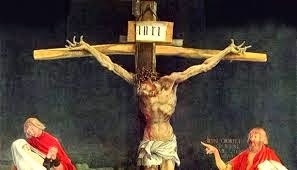
I am going to bed. Not even looking at Velázquez or Sargent can help me tonight.
I am tired of adoptees being told that our mothers' rights trump ours. That we don't really matter, or we have to work around other people's comfort levels, or blood ties aren't important, or any of a thousand things. We might be disruptive. We might disturb people's peace. We might wake up long buried feelings and make others uncomfortable. Our fathers were all "bad boys." So many possibilities for damage we might bring; never mind about our own feelings. Never mind that we have thought long and hard and lived with our own discomfort. Never mind.
Our mothers need protection from us, as the legislation in Louisiana and Missouri suggests. It's disappointing what people accept as their lot.
Never mind our health. We are not really human. We can do just fine without medical histories. Writing "Adopted, don't know" works so well.
Seriously, animals get treated better than we do sometimes. Purebred dogs have pedigrees. I knew my dog's sire's name but didn't know my own father's name. And before anyone trots out that no one really knows who their father is, please check yourself. That is pathetic. Yes, people lie about paternity, but that's not how the game is normally played.
I was talking to my MD today, we went over my medical "problem list." Its length and seriousness sent me over the edge. I am angry. I am beyond angry, actually.
I guess what it comes down to is that I am more than a list of my problems, but they have set my world upside down. I could have been spared things on the list if I'd known more about myself, or if my circumstances had been different. It is what it is. On the other hand, I am impressed that I am still alive.
That said, I am tired of being Atlas. I am tired of bearing the weight of other people's bullshit and lack of concern. I don't even feel like Rodin's fallen caryatids today. That would require more strength than I have. I feel more like the plague-afflicted, suffering Jesus in the Isenheim Altarpiece. And yes, note John the Baptist pointing, although I give him a more sinister reading since he stands in for the Cabal and naysayers in general ("Ooh, look, Jesus is so angry and bitter and emotional. How embarrassing not to be empirical like we are.") The swooning mother: also a bit problematic.
I am going to bed. Not even looking at Velázquez or Sargent can help me tonight.
Sunday, May 04, 2014
Mayday
It has been a week since my birthday. I may be half of 90, but I am still alive.
I spent most of the day in the wonderful company of my lovely friend Nalini, who took me to see two films: Manakamana, about people coming and going from a temple in Chitwan, Nepal; and Belle, about a mixed-race woman raised by her father's aristocratic family in late 18th-century England. I enjoyed Manakamana, although I think it could have been edited down to better effect. Some of the groupings of people in the cable car were very compelling; others were less so. I loved the grandfather/grandson pair; the chatty women; the daughter-/mother-in-law eating melting ice cream; the older couple, whom we saw both coming and going; and the young men in the rock band, who provided interesting cultural commentary. They would have been a thoughtful confounding of the setup of timeless-modern that the directors were positing. I couldn't stand the stereotypical white woman, who was going on and on about the horrible Himalyan foothills, and how there is no decent black-and-white film in Nepal, blah blah blah. Her pretentiousness made me want to slap her. On the other hand...we all know people like that are out there. Belle, by contrast, was a fictional telling of a true story about a woman raised by family, all extrapolated from a Zoffany portrait showing two young women, of different colors, as equals. Not typical of the time. At. All. I watched her struggle with her face, herself, her color: pulling at herself in the mirror. I don't know what it's like to want to change my color, but I do know what it's like to be different and pull at my face, wanting it to be different and like the people I am around. I loved that her father took her to his family, and insisted that they raise her: "I am not ashamed." Tears streamed down my face. I hope that was what my own father would have said, introducing me to his family. I hear from people that he would have done. I don't know. Is hoping crazy? "Do not be afraid. I am here to take you to a good life. A life that you were born to."
I drank Pimm's on my birthday. Two glasses. I wanted to be in England, my safe place. Where I can hide, act, pretend. Where when I was young, I knew I was an odd duck, but it was all right.
Then later in the week, on May Day, I saw an excellent film, The Skeleton Twins, about siblings who have not spoken in 10 years (starring Bill Hader and Kristin Wiig in dramatic roles). They are reunited after the brother attempts suicide. His sister takes him in, nurtures him gingerly, and they try to apply salve to each other's brokenness. Sometimes clumsily, sometimes with great skill. In one fabulous scene they reenact something from their childhood (or so it's implied): a lip synching/dance routine to an 80's power ballad. I cried again. They shared such history. I lost that with my brother. I will never have that, can never have that. And whatever history we can build, we're not doing a very good job of things right now. Are we going to be 90 and 85 and say, "What did we do?" So I reached out to him. No response. All I can do is try, but my best and his best may never match up.
"Mayday," I want to shriek into the wind.
Then I was cleaning out my closet and found a book of my grandmother's poetry that C had given me. I read through it last night, weeping. One particular short poem was funny but painful:
Later
Later--when I'm older
When I'm grayer
Fatter, Bolder
Then I'll do it
Later, when I'm more
Than ten pounds overweight
Later, oh three or four
Years, before too late.
Ha, Mimi. Did you do it? Did you? She died almost a year ago now. I hope she did what she wanted to do; unfortunately for me, that did not include welcoming me with open arms.
I hope that my brother can find it in his heart to meet me a little towards the middle. I hope that my mother can find a way to work with me on what happened with my father. It is not just my story, although I am the outcome of their meeting. I know that they shared more than a one-night stand. I understand the hurting, but talking might help.
What else?
I saw Richard Linklater's brilliant new film, Boyhood, that he made over 12 years, filming one scene a year and tracing in real time a family's change. It was marvelous to see in the three hours a boy grow to manhood and how his relationships changed, both with himself and with others. Ethan Hawke, playing his father, was subtle and amazing, as usual, and Linklater's eye: Tolstoyan, as Mark suggested, watching and registering without judgment. People are flawed. We all have strengths and weaknesses, if we can see them and honor them and try to change. "Life doesn't give you bumpers." That's for damn sure.
I am seeing more and more that life is trying to make the best of what we have, and fighting for what and whom we love.
I spent most of the day in the wonderful company of my lovely friend Nalini, who took me to see two films: Manakamana, about people coming and going from a temple in Chitwan, Nepal; and Belle, about a mixed-race woman raised by her father's aristocratic family in late 18th-century England. I enjoyed Manakamana, although I think it could have been edited down to better effect. Some of the groupings of people in the cable car were very compelling; others were less so. I loved the grandfather/grandson pair; the chatty women; the daughter-/mother-in-law eating melting ice cream; the older couple, whom we saw both coming and going; and the young men in the rock band, who provided interesting cultural commentary. They would have been a thoughtful confounding of the setup of timeless-modern that the directors were positing. I couldn't stand the stereotypical white woman, who was going on and on about the horrible Himalyan foothills, and how there is no decent black-and-white film in Nepal, blah blah blah. Her pretentiousness made me want to slap her. On the other hand...we all know people like that are out there. Belle, by contrast, was a fictional telling of a true story about a woman raised by family, all extrapolated from a Zoffany portrait showing two young women, of different colors, as equals. Not typical of the time. At. All. I watched her struggle with her face, herself, her color: pulling at herself in the mirror. I don't know what it's like to want to change my color, but I do know what it's like to be different and pull at my face, wanting it to be different and like the people I am around. I loved that her father took her to his family, and insisted that they raise her: "I am not ashamed." Tears streamed down my face. I hope that was what my own father would have said, introducing me to his family. I hear from people that he would have done. I don't know. Is hoping crazy? "Do not be afraid. I am here to take you to a good life. A life that you were born to."
I drank Pimm's on my birthday. Two glasses. I wanted to be in England, my safe place. Where I can hide, act, pretend. Where when I was young, I knew I was an odd duck, but it was all right.
Then later in the week, on May Day, I saw an excellent film, The Skeleton Twins, about siblings who have not spoken in 10 years (starring Bill Hader and Kristin Wiig in dramatic roles). They are reunited after the brother attempts suicide. His sister takes him in, nurtures him gingerly, and they try to apply salve to each other's brokenness. Sometimes clumsily, sometimes with great skill. In one fabulous scene they reenact something from their childhood (or so it's implied): a lip synching/dance routine to an 80's power ballad. I cried again. They shared such history. I lost that with my brother. I will never have that, can never have that. And whatever history we can build, we're not doing a very good job of things right now. Are we going to be 90 and 85 and say, "What did we do?" So I reached out to him. No response. All I can do is try, but my best and his best may never match up.
"Mayday," I want to shriek into the wind.
Then I was cleaning out my closet and found a book of my grandmother's poetry that C had given me. I read through it last night, weeping. One particular short poem was funny but painful:
Later
Later--when I'm older
When I'm grayer
Fatter, Bolder
Then I'll do it
Later, when I'm more
Than ten pounds overweight
Later, oh three or four
Years, before too late.
Ha, Mimi. Did you do it? Did you? She died almost a year ago now. I hope she did what she wanted to do; unfortunately for me, that did not include welcoming me with open arms.
I hope that my brother can find it in his heart to meet me a little towards the middle. I hope that my mother can find a way to work with me on what happened with my father. It is not just my story, although I am the outcome of their meeting. I know that they shared more than a one-night stand. I understand the hurting, but talking might help.
What else?
I saw Richard Linklater's brilliant new film, Boyhood, that he made over 12 years, filming one scene a year and tracing in real time a family's change. It was marvelous to see in the three hours a boy grow to manhood and how his relationships changed, both with himself and with others. Ethan Hawke, playing his father, was subtle and amazing, as usual, and Linklater's eye: Tolstoyan, as Mark suggested, watching and registering without judgment. People are flawed. We all have strengths and weaknesses, if we can see them and honor them and try to change. "Life doesn't give you bumpers." That's for damn sure.
I am seeing more and more that life is trying to make the best of what we have, and fighting for what and whom we love.
Saturday, April 26, 2014
Generations
Mark and I have spent the last few nights watching the German miniseries Unsere Mütter, Unsere Väter ("Our Mothers, Our Fathers") which will air (or has aired) in the U.S. as "Generation War." It tells the story of WWII from the point of view of five twenty-something friends in Germany, one of them Jewish, and their experiences 1941-1945. One of the characters was a nurse on the Russian front; I couldn't even imagine being in her shoes. It was anxiety-inducing to watch this miniseries, to say the least; why not be consistent with the tone of the week?
I know I missed many subtleties watching it in German with no subtitles, although Mark helped significantly. I am waiting for it to come out on DVD with English subtitles on May 6th, and then maybe I will have the courage to watch it again. I have to concentrate so very hard to catch what is said, and I know I missed a great deal. My German is not fabulous. The boys watched some of it with us and had excellent questions. They, of course, understood nearly all of the dialogue. I am completely envious of their German skills.
Apparently Unsere Mütter, Unsere Väter was both popular and controversial in Germany. The war generation is almost all gone; people still argue much about complicity in war crimes. Who did anything; could they do anything? What did they feel about it? This is another attempt in the culture to come to terms with what happened.
Mark's father fought on the Russian front and is going to be 90 this year, and he has only recently opened up about what he went through. He survived in the end because he was shot in the arm, was still fit enough to leave Russia, beat the Russians on their push westward, and was taken prisoner by the British. It is strange to think that my husband and sons are here because of the actions of a Russian soldier, 69 years ago. If that soldier had had a more accurate shot, Mark, Callum, and Tobey wouldn't be here.
http://www.dailymotion.com/video/x1au6hk_unsere-mutter-unsere-vater-episode-1-part-1-subbed_shortfilms
I know I missed many subtleties watching it in German with no subtitles, although Mark helped significantly. I am waiting for it to come out on DVD with English subtitles on May 6th, and then maybe I will have the courage to watch it again. I have to concentrate so very hard to catch what is said, and I know I missed a great deal. My German is not fabulous. The boys watched some of it with us and had excellent questions. They, of course, understood nearly all of the dialogue. I am completely envious of their German skills.
Apparently Unsere Mütter, Unsere Väter was both popular and controversial in Germany. The war generation is almost all gone; people still argue much about complicity in war crimes. Who did anything; could they do anything? What did they feel about it? This is another attempt in the culture to come to terms with what happened.
Mark's father fought on the Russian front and is going to be 90 this year, and he has only recently opened up about what he went through. He survived in the end because he was shot in the arm, was still fit enough to leave Russia, beat the Russians on their push westward, and was taken prisoner by the British. It is strange to think that my husband and sons are here because of the actions of a Russian soldier, 69 years ago. If that soldier had had a more accurate shot, Mark, Callum, and Tobey wouldn't be here.
http://www.dailymotion.com/video/x1au6hk_unsere-mutter-unsere-vater-episode-1-part-1-subbed_shortfilms
Tuesday, April 22, 2014
Tenuous
I have been working my two jobs: teaching and being on the unit as my regular RN self. I am exhausted. It's been rewarding but extremely tiring. I have allowed my students to start IVs on me: brave or masochistic? At one point, they couldn't get the IV in, so I helped. Maybe not a skill I want to advertise too widely. "Look! I can start IVs on myself!"

I was pushed emotionally to the limit by an adoption on the unit that I cannot discuss, of course. Suffice it to say that it felt unbearably traumatic on many levels. I avoid taking patients who are relinquishing because I know that I cannot be unbiased, but my student had the patient and I ended up in the room to supervise. I cried. Copiously. And afterward at home for days. I felt like I was a cog in the cruel wheel, and I kept thinking, "Sorry, sorry, sorry..."
The San Francisco International Film Festival opens this week, and I have plans to go see Belle, about a mixed-race woman raised in 18th-century Britain by her white relatives: fitting in, and not. On my birthday, with my partner in crime, Nalini.
A friend told me that his aunt has published his grandmother's diary from the war years in Bath. She was an ophthalmologist, and her husband a GP. I have been reading it joyfully; the English of that generation, and with that education, are generally a delight when they open up their worlds to you. I appreciate her forthrightness and pugnacity in getting petrol for the nurse, for example. She describes events and foods and outings with such skill: Churchill's speeches; the wisteria; her practice; the annoyance of the dust everywhere after the blitz. I know from my friend's stories that she was a character, to put it mildly; the diary helps to round out that picture in a brilliant way. My friend paid me a great compliment when once he said that my accounts of the unit sometimes remind him of his grandmother's diary. If you have any interest in diaries or England or WWII, I wholeheartedly recommend getting your hands on Carry on Coping: Diary of a Doctor 1942-1945, by Joan F. Hickson.
Otherwise, I have been pulling myself along. Slowly. Wondering what is the value of relationships carried on in single syllables? Not even poetic syllables. Again, back to that. What is offered, and why? Most of the time I don't care. This week, somehow, of course, I care. Why is it always on me? Why is it my job to reach out more, and more, and be met with another single syllable? I know I can choose to walk away. The burden is immense. What is it that makes other people so laconic? I have done my best to meet halfway, to make amends. To say my piece. If the best I can get in return is one syllable, is that a relationship? I would say that it isn't. It's a web-thin thread. Is that enough for *now*? What a sad situation.
I am more or less content. I have had to find contentment with what is available. It is better than running after what isn't there, or what is false. The best I can do is shove it under the rug, as they do. Which is also sad.
But as I am not an avoider, the lack is painful.
I was pushed emotionally to the limit by an adoption on the unit that I cannot discuss, of course. Suffice it to say that it felt unbearably traumatic on many levels. I avoid taking patients who are relinquishing because I know that I cannot be unbiased, but my student had the patient and I ended up in the room to supervise. I cried. Copiously. And afterward at home for days. I felt like I was a cog in the cruel wheel, and I kept thinking, "Sorry, sorry, sorry..."
The San Francisco International Film Festival opens this week, and I have plans to go see Belle, about a mixed-race woman raised in 18th-century Britain by her white relatives: fitting in, and not. On my birthday, with my partner in crime, Nalini.
A friend told me that his aunt has published his grandmother's diary from the war years in Bath. She was an ophthalmologist, and her husband a GP. I have been reading it joyfully; the English of that generation, and with that education, are generally a delight when they open up their worlds to you. I appreciate her forthrightness and pugnacity in getting petrol for the nurse, for example. She describes events and foods and outings with such skill: Churchill's speeches; the wisteria; her practice; the annoyance of the dust everywhere after the blitz. I know from my friend's stories that she was a character, to put it mildly; the diary helps to round out that picture in a brilliant way. My friend paid me a great compliment when once he said that my accounts of the unit sometimes remind him of his grandmother's diary. If you have any interest in diaries or England or WWII, I wholeheartedly recommend getting your hands on Carry on Coping: Diary of a Doctor 1942-1945, by Joan F. Hickson.
Otherwise, I have been pulling myself along. Slowly. Wondering what is the value of relationships carried on in single syllables? Not even poetic syllables. Again, back to that. What is offered, and why? Most of the time I don't care. This week, somehow, of course, I care. Why is it always on me? Why is it my job to reach out more, and more, and be met with another single syllable? I know I can choose to walk away. The burden is immense. What is it that makes other people so laconic? I have done my best to meet halfway, to make amends. To say my piece. If the best I can get in return is one syllable, is that a relationship? I would say that it isn't. It's a web-thin thread. Is that enough for *now*? What a sad situation.
I am more or less content. I have had to find contentment with what is available. It is better than running after what isn't there, or what is false. The best I can do is shove it under the rug, as they do. Which is also sad.
But as I am not an avoider, the lack is painful.
Monday, April 14, 2014
Vestiges
My friend's father died a little more than a month ago, and I went to his memorial service on Saturday. His death had not been unexpected, but he was young, only 70. He had been ravaged by an unusually brutal form of Parkinson's--Parkinson's Plus--that left him a shell of who he had been in less than two years. Death in some ways was true relief.
I only had the pleasure of meeting him a few times when he was still vibrant; I sat by his side several times in the nursing home in the weeks before he died. He enjoyed having you hold his hand and talk to him.
He as a man of great intellect and, it would appear, of the Old World in many ways.
I first met my friend in 2007, and she said that she was half-Turkish. She, like so many others, wondered if I were part Middle Eastern or Jewish. This was, of course, before I had found my family. Her father had immigrated to the United States from Istanbul, she said, and was a polymath. Was quirky. Spoke three languages fluently. He sounded fascinating to me.
I remember meeting him at one of her daughters' birthday parties and talking a little bit about old Istanbul, Orhan Pamuk, and Byzantine art; I spent the better part of a week in Istanbul once and had a wonderful time becoming lost in it, just wandering. I wished I could have spoken to my friend's father more about his family and growing up in Istanbul of the 1940's and 1950's. He was a rather shy man, though: an engineer, more at home with ideas than expressions of private concerns. He would much rather launch into excursions on Saint Augustine than talk about his feelings. My friend almost never spoke with him about his family or her family history.
That said, he was amazing about showing that he cared for her, even if he didn't say it explicitly. She always felt his unconditional love. He was the parent who went to every single sporting event without fail. He was the parent who helped her raise her daughter when she decided to have a child at 19 and never said a single word in judgment. He made a place for his granddaughter in his office so that he could help his daughter continue her studies. He took his granddaughter proudly to Rotary Club meetings. He was the parent, as my friend said at the memorial service, whom she would call if she had one phone call in jail. Because she knew he would support her always, 100%, without question.
Then there were the surprises. A letter from my friend's aunt revealed that he had been an actor in college; that he had lived in Italy after attaining his credentials. His ex-wife, my friend's mother, had not even known these things.
We saw images of a gloriously handsome young man on the screen, with Ray Bans and tousled black hair. He was educated by French Jesuits. As a young engineer, he helped build the first bridge to span the Bosporus. He came from an illustrious Ottoman family that had served the Sultan as physicians. He came to the United States on a lark and never returned "home" because he loved his children and knew that they were Americans.
His many friends at the service used the word "cussed" to describe him. Apparently he would offer up unsolicited criticism of the priest's words each week, saying, "I read something recently that would have strengthened your argument..." He loved to play Devil's advocate. He filled roles that no one else would fill; he taught Sunday School. He found a home in Christianity although raised in Islam because he said that it was the same God, after all. He brought a gift to every single event. Why? Because he was raised in Islam, although no one seemed to register this.
I recounted what I had learned of the remarkable life of my friend's father to Thomenon yesterday, and how his loss weighed so heavily on me. He responded, "Muppie, that's because the Old World is gone. This man came from the Old World. People like that don't exist anymore. Horribly sad."
My pain became more personal as I sat at a table with my friend and her family, and her in-laws. As the photographs would flash by on the screen, people would say, "Look! There's A! There's B! There's so-and-so!" All in different family faces, or in the baby pictures of my friend's father. As it should be. But of course this struck me all the more because belonging is foreign. We adoptees are relegated to another place where we do not fit, or if we fit it's too late; or it's too much; or it's too bothersome; or we must navigate the narrows with great care and skill. We miss out on history, on shared experiences, on so much. We have likenesses, but what else? What tests must we pass? There is incredible loss.
I was honored that I was able to share the memories of Ilhami Karaca, and I am all the more distraught that I missed out knowing my own father. The nearly 20 years since his death are so long ago, a wide gulf.
I only had the pleasure of meeting him a few times when he was still vibrant; I sat by his side several times in the nursing home in the weeks before he died. He enjoyed having you hold his hand and talk to him.
He as a man of great intellect and, it would appear, of the Old World in many ways.
I first met my friend in 2007, and she said that she was half-Turkish. She, like so many others, wondered if I were part Middle Eastern or Jewish. This was, of course, before I had found my family. Her father had immigrated to the United States from Istanbul, she said, and was a polymath. Was quirky. Spoke three languages fluently. He sounded fascinating to me.
I remember meeting him at one of her daughters' birthday parties and talking a little bit about old Istanbul, Orhan Pamuk, and Byzantine art; I spent the better part of a week in Istanbul once and had a wonderful time becoming lost in it, just wandering. I wished I could have spoken to my friend's father more about his family and growing up in Istanbul of the 1940's and 1950's. He was a rather shy man, though: an engineer, more at home with ideas than expressions of private concerns. He would much rather launch into excursions on Saint Augustine than talk about his feelings. My friend almost never spoke with him about his family or her family history.
That said, he was amazing about showing that he cared for her, even if he didn't say it explicitly. She always felt his unconditional love. He was the parent who went to every single sporting event without fail. He was the parent who helped her raise her daughter when she decided to have a child at 19 and never said a single word in judgment. He made a place for his granddaughter in his office so that he could help his daughter continue her studies. He took his granddaughter proudly to Rotary Club meetings. He was the parent, as my friend said at the memorial service, whom she would call if she had one phone call in jail. Because she knew he would support her always, 100%, without question.
Then there were the surprises. A letter from my friend's aunt revealed that he had been an actor in college; that he had lived in Italy after attaining his credentials. His ex-wife, my friend's mother, had not even known these things.
We saw images of a gloriously handsome young man on the screen, with Ray Bans and tousled black hair. He was educated by French Jesuits. As a young engineer, he helped build the first bridge to span the Bosporus. He came from an illustrious Ottoman family that had served the Sultan as physicians. He came to the United States on a lark and never returned "home" because he loved his children and knew that they were Americans.
His many friends at the service used the word "cussed" to describe him. Apparently he would offer up unsolicited criticism of the priest's words each week, saying, "I read something recently that would have strengthened your argument..." He loved to play Devil's advocate. He filled roles that no one else would fill; he taught Sunday School. He found a home in Christianity although raised in Islam because he said that it was the same God, after all. He brought a gift to every single event. Why? Because he was raised in Islam, although no one seemed to register this.
I recounted what I had learned of the remarkable life of my friend's father to Thomenon yesterday, and how his loss weighed so heavily on me. He responded, "Muppie, that's because the Old World is gone. This man came from the Old World. People like that don't exist anymore. Horribly sad."
My pain became more personal as I sat at a table with my friend and her family, and her in-laws. As the photographs would flash by on the screen, people would say, "Look! There's A! There's B! There's so-and-so!" All in different family faces, or in the baby pictures of my friend's father. As it should be. But of course this struck me all the more because belonging is foreign. We adoptees are relegated to another place where we do not fit, or if we fit it's too late; or it's too much; or it's too bothersome; or we must navigate the narrows with great care and skill. We miss out on history, on shared experiences, on so much. We have likenesses, but what else? What tests must we pass? There is incredible loss.
I was honored that I was able to share the memories of Ilhami Karaca, and I am all the more distraught that I missed out knowing my own father. The nearly 20 years since his death are so long ago, a wide gulf.
Subscribe to:
Posts (Atom)